
Other sizes and cross-sections are possible on request.
Berolina-Liner: Area of application
Gravity sewers
- Round profiles: DN 150 (6“) – 950 (37“)
- Ovoid cross-sections: 200/300 mm (8“/12“) – 700/1.050 mm (28“/41“)
Berolina-Liner with IES: Area of application
Gravity sewers
- Circular profiles: DN 150 (6“) – DN 600 (24“)
Berolina-Liner: Advantages
- Seamless construction
- Particular extensibility
- Ready for installations up to 1,640 ft, with 8”-12” diameters available in lengths up to 3,281 ft
- Can be stored for 6 months (VE liners) or 12 months (UP liners)
- Fast curing
- Smooth surface
- Suitable for all standard pipe profiles
- Abrasion protection layer
- Bridging small profile and cross-section changes
- Resin types depending on the requirement (polyester resin, vinyl ester resin, polystyrene-free resin)
- Quality management in accordance with EN ISO 9001:2015
Berolina-Liner with IES: Additional advantages
Integrated Enhanced Security (available up to DN 600)
- Can be a substitute for smooth slip film
- Reducing installation time
Structure of the Berolina-Liner
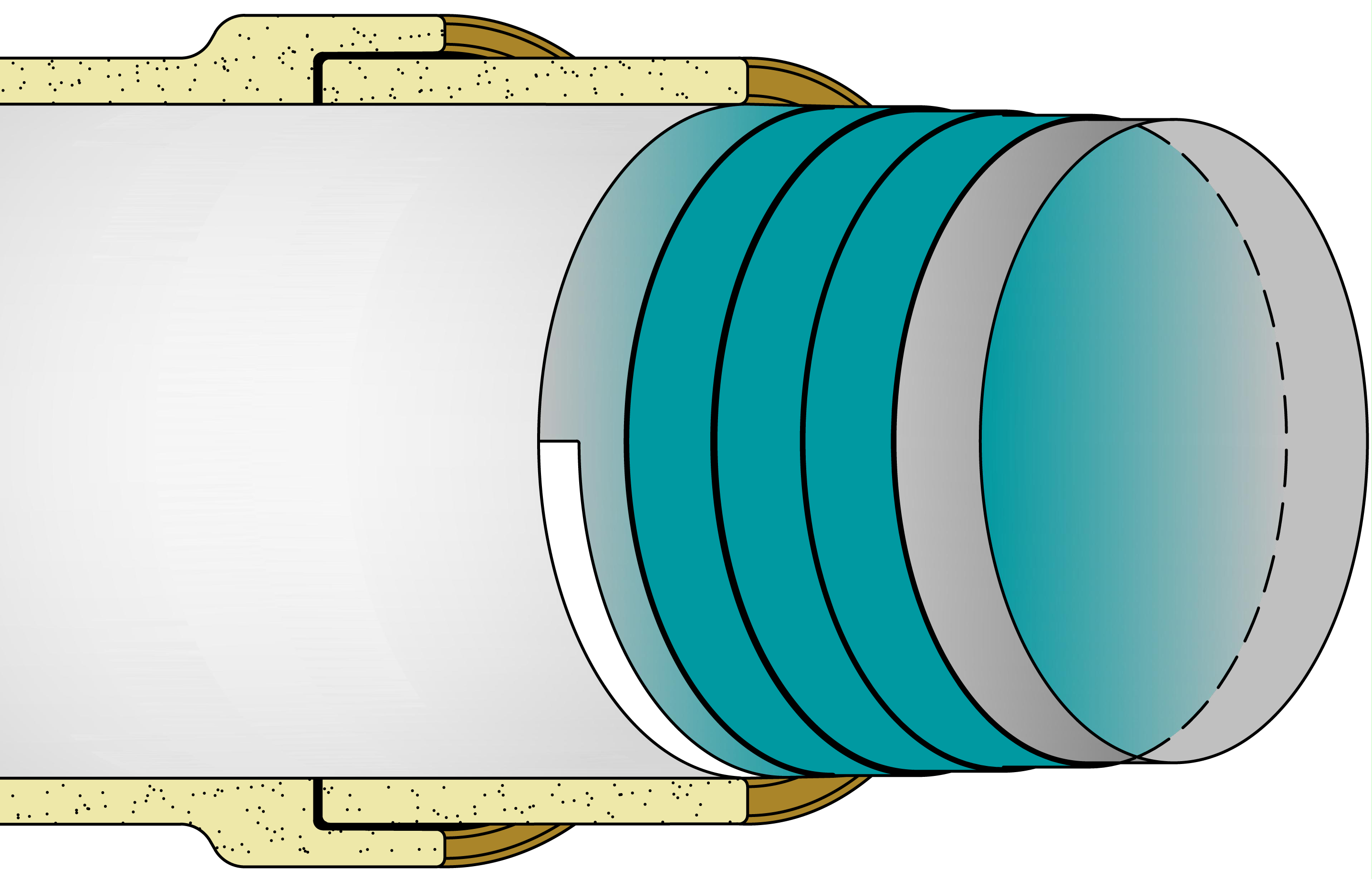



- Inner film
- Abrasion protection layer
- Different glass layers
- Outer film with UV protective film
- Optional: Integrated Enhanced Security (IES)
- Host pipe
Carrying material
Glass fabric complex E-CR according to (ASTM D578)
Resins
Unsaturated polyester resins (UP resins)
- Type 1140 according to DIN 16946-2
- Group 3 according to DIN 18820-1
- Group 4 according to EN 13121-1
Vinyl ester resins (VE resins)
- Type 1310 according to DIN 16946-2
- Group 5 according to DIN 18820-1
- Group 7 B according to EN 13121-1
Polystyrene-free resins
NO ASTM EQUIVALENT TESTS
Material properties
Density after curing (ASTM D1505): 93.6 lb/ft³ (±31.2 lb/ft³)
Glass fiber content (ASTM D2584): 46% (± 8%)
Glass surface weight (per mm load-bearing wall thickness): 19.2 oz/yd² (+4.4 / -3.0 oz/yd²
Ring E-Modulus (ASTM D2412): ≥ 1,450,000 psi
Bending E-Modulus (ASTM D790): ≥ 1,262,000 psi
Bending Stress (ASTM D790): ≥ 21,800 psi
Reduction Factor For long-term values (ASTM D5365): A = 1.45
Ring E-Modulus (ASTM D2412): ≥ 986,000 psi
Bending Stress (ASTM D790): ≥ 15,200 psi
Laminate construction: Multi-layered, seamless, and overlapping in the longitudinal direction; overlaps arranged with offset
Longitudinal elongation during calibration: ~ 0.0%
Permissible diameter tolerances of old pipes: DIA ≤ 32 in. ± 5% – DIA > 32 in. ± 2%

Phone: +49 (0)3304 / 20 88 124
Fax: +49 (0)3304 / 20 88 110
Cell: +49 (0)172 / 88 70 220

Phone: +49 (0)3304 / 20 88 100
Fax: +49 (0)3304 / 20 88 110
Cell: +49 (0)172 / 88 28 403
Phone: +49 (0)3304 / 20 88 100
Fax: +49 (0)3304 / 20 88 110
Cell: +49 (0)171 / 88 28 269

Phone: +49 (0)3304 / 20 88 100
Fax: +49 (0)3304 / 20 88 111
Cell: +49 (0)172 / 88 28 002
Video: Berolina-Liner System – Virtual construction site
-
- Area of application
-
Berolina-Liner: Area of application
Gravity sewers
- Round profiles: DN 150 (6“) – 950 (37“)
- Ovoid cross-sections: 200/300 mm (8“/12“) – 700/1.050 mm (28“/41“)
Other sizes and cross-sections are possible on request.
Berolina-Liner with IES: Area of application
Gravity sewers
- Circular profiles: DN 150 (6“) – DN 600 (24“)
- Advantages
-
Berolina-Liner: Advantages
- Seamless construction
- Particular extensibility
- Ready for installations up to 1,640 ft, with 8”-12” diameters available in lengths up to 3,281 ft
- Can be stored for 6 months (VE liners) or 12 months (UP liners)
- Fast curing
- Smooth surface
- Suitable for all standard pipe profiles
- Abrasion protection layer
- Bridging small profile and cross-section changes
- Resin types depending on the requirement (polyester resin, vinyl ester resin, polystyrene-free resin)
- Quality management in accordance with EN ISO 9001:2015
Berolina-Liner with IES: Additional advantages
Integrated Enhanced Security (available up to DN 600)
- Can be a substitute for smooth slip film
- Reducing installation time
- Structure
-
Structure of the Berolina-Liner
- Inner film
- Abrasion protection layer
- Different glass layers
- Outer film with UV protective film
- Optional: Integrated Enhanced Security (IES)
- Host pipe
- Technical data
-
Carrying material
Glass fabric complex E-CR according to (ASTM D578)
Resins
Unsaturated polyester resins (UP resins)
- Type 1140 according to DIN 16946-2
- Group 3 according to DIN 18820-1
- Group 4 according to EN 13121-1
Vinyl ester resins (VE resins)
- Type 1310 according to DIN 16946-2
- Group 5 according to DIN 18820-1
- Group 7 B according to EN 13121-1
Polystyrene-free resins
NO ASTM EQUIVALENT TESTS
Material properties
Density after curing (ASTM D1505): 93.6 lb/ft³ (±31.2 lb/ft³)
Glass fiber content (ASTM D2584): 46% (± 8%)
Glass surface weight (per mm load-bearing wall thickness): 19.2 oz/yd² (+4.4 / -3.0 oz/yd²Ring E-Modulus (ASTM D2412): ≥ 1,450,000 psi
Bending E-Modulus (ASTM D790): ≥ 1,262,000 psi
Bending Stress (ASTM D790): ≥ 21,800 psiReduction Factor For long-term values (ASTM D5365): A = 1.45
Ring E-Modulus (ASTM D2412): ≥ 986,000 psi
Bending Stress (ASTM D790): ≥ 15,200 psiLaminate construction: Multi-layered, seamless, and overlapping in the longitudinal direction; overlaps arranged with offset
Longitudinal elongation during calibration: ~ 0.0%
Permissible diameter tolerances of old pipes: DIA ≤ 32 in. ± 5% – DIA > 32 in. ± 2% - Contact
-

Phone: +49 (0)3304 / 20 88 124
Fax: +49 (0)3304 / 20 88 110
Cell: +49 (0)172 / 88 70 220
Phone: +49 (0)3304 / 20 88 100
Fax: +49 (0)3304 / 20 88 110
Cell: +49 (0)172 / 88 28 403Phone: +49 (0)3304 / 20 88 100
Fax: +49 (0)3304 / 20 88 110
Cell: +49 (0)171 / 88 28 269Phone: +49 (0)3304 / 20 88 100
Fax: +49 (0)3304 / 20 88 111
Cell: +49 (0)172 / 88 28 002 - Downloads
- Virtual construction site
-
Video: Berolina-Liner System – Virtual construction site
Area of application
Berolina-Liner: Area of application
Gravity sewers
- Round profiles: DN 150 (6“) – 950 (37“)
- Ovoid cross-sections: 200/300 mm (8“/12“) – 700/1.050 mm (28“/41“)
Other sizes and cross-sections are possible on request.
Berolina-Liner with IES: Area of application
Gravity sewers
- Circular profiles: DN 150 (6“) – DN 600 (24“)
Advantages
Berolina-Liner: Advantages
- Seamless construction
- Particular extensibility
- Ready for installations up to 1,640 ft, with 8”-12” diameters available in lengths up to 3,281 ft
- Can be stored for 6 months (VE liners) or 12 months (UP liners)
- Fast curing
- Smooth surface
- Suitable for all standard pipe profiles
- Abrasion protection layer
- Bridging small profile and cross-section changes
- Resin types depending on the requirement (polyester resin, vinyl ester resin, polystyrene-free resin)
- Quality management in accordance with EN ISO 9001:2015
Berolina-Liner with IES: Additional advantages
Integrated Enhanced Security (available up to DN 600)
- Can be a substitute for smooth slip film
- Reducing installation time
Structure
Structure of the Berolina-Liner
- Inner film
- Abrasion protection layer
- Different glass layers
- Outer film with UV protective film
- Optional: Integrated Enhanced Security (IES)
- Host pipe
Contact
Phone: +49 (0)3304 / 20 88 100
Fax: +49 (0)3304 / 20 88 111
Cell: +49 (0)172 / 88 28 002
Phone: +49 (0)3304 / 20 88 100
Fax: +49 (0)3304 / 20 88 110
Cell: +49 (0)171 / 88 28 269
Phone: +49 (0)3304 / 20 88 100
Fax: +49 (0)3304 / 20 88 110
Cell: +49 (0)172 / 88 28 403
Phone: +49 (0)3304 / 20 88 124
Fax: +49 (0)3304 / 20 88 110
Cell: +49 (0)172 / 88 70 220
Technical data
Carrying material
Glass fabric complex E-CR according to (ASTM D578)
Resins
Unsaturated polyester resins (UP resins)
- Type 1140 according to DIN 16946-2
- Group 3 according to DIN 18820-1
- Group 4 according to EN 13121-1
Vinyl ester resins (VE resins)
- Type 1310 according to DIN 16946-2
- Group 5 according to DIN 18820-1
- Group 7 B according to EN 13121-1
Polystyrene-free resins
NO ASTM EQUIVALENT TESTS
Material properties
Density after curing (ASTM D1505): 93.6 lb/ft³ (±31.2 lb/ft³)
Glass fiber content (ASTM D2584): 46% (± 8%)
Glass surface weight (per mm load-bearing wall thickness): 19.2 oz/yd² (+4.4 / -3.0 oz/yd²
Ring E-Modulus (ASTM D2412): ≥ 1,450,000 psi
Bending E-Modulus (ASTM D790): ≥ 1,262,000 psi
Bending Stress (ASTM D790): ≥ 21,800 psi
Reduction Factor For long-term values (ASTM D5365): A = 1.45
Ring E-Modulus (ASTM D2412): ≥ 986,000 psi
Bending Stress (ASTM D790): ≥ 15,200 psi
Laminate construction: Multi-layered, seamless, and overlapping in the longitudinal direction; overlaps arranged with offset
Longitudinal elongation during calibration: ~ 0.0%
Permissible diameter tolerances of old pipes: DIA ≤ 32 in. ± 5% – DIA > 32 in. ± 2%
Fast, effective, and trenchless
The Berolina-Liner System is a cost-effective and efficient method for sewer pipe rehabilitation. Time-consuming excavation work can be avoided – the disruption to infrastructure is minor and short-term. When compared to other methods, energy consumption is reduced significantly thanks to optimized production, transportation and installation conditions.
Different liner types are available to meet most requirements for sewers in need of rehabilitation:
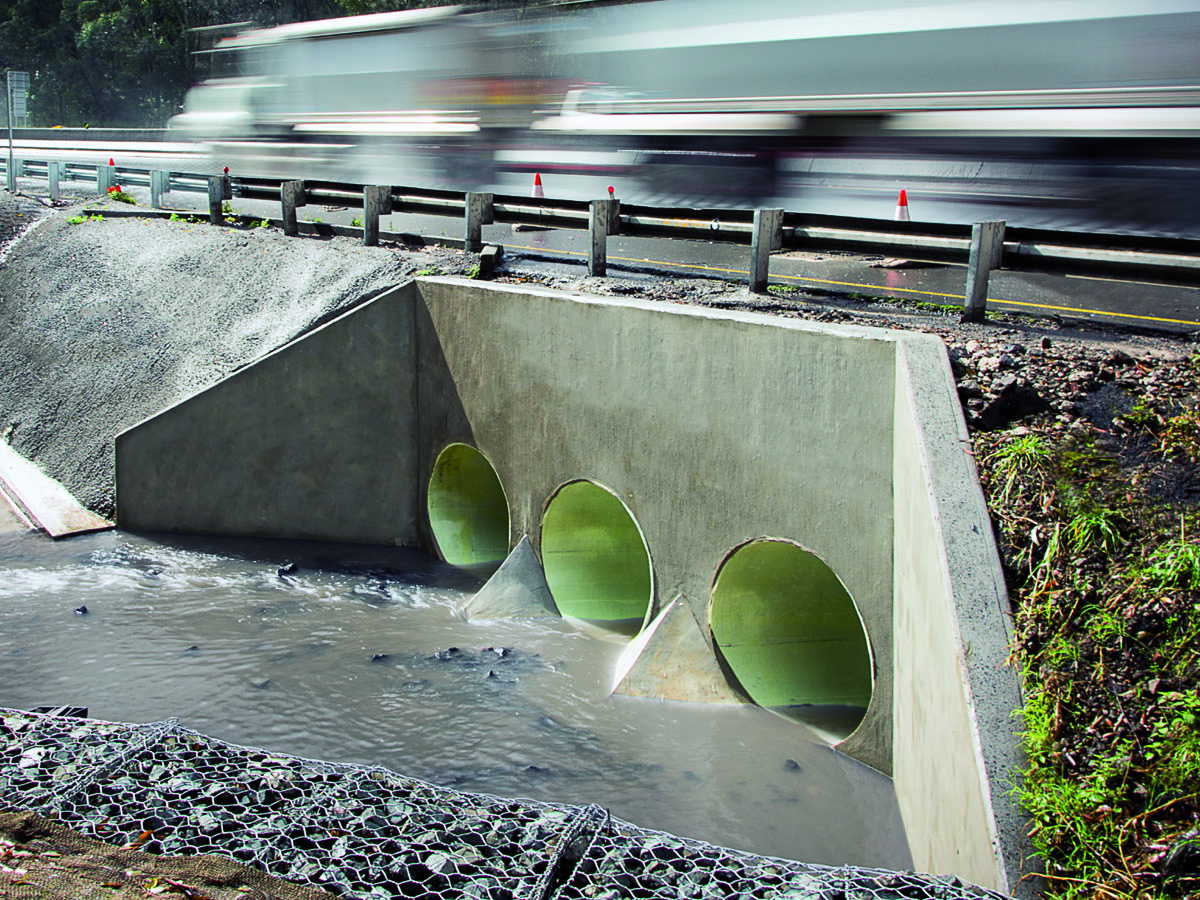
Superior mechanical characteristics enables low cross-section loss
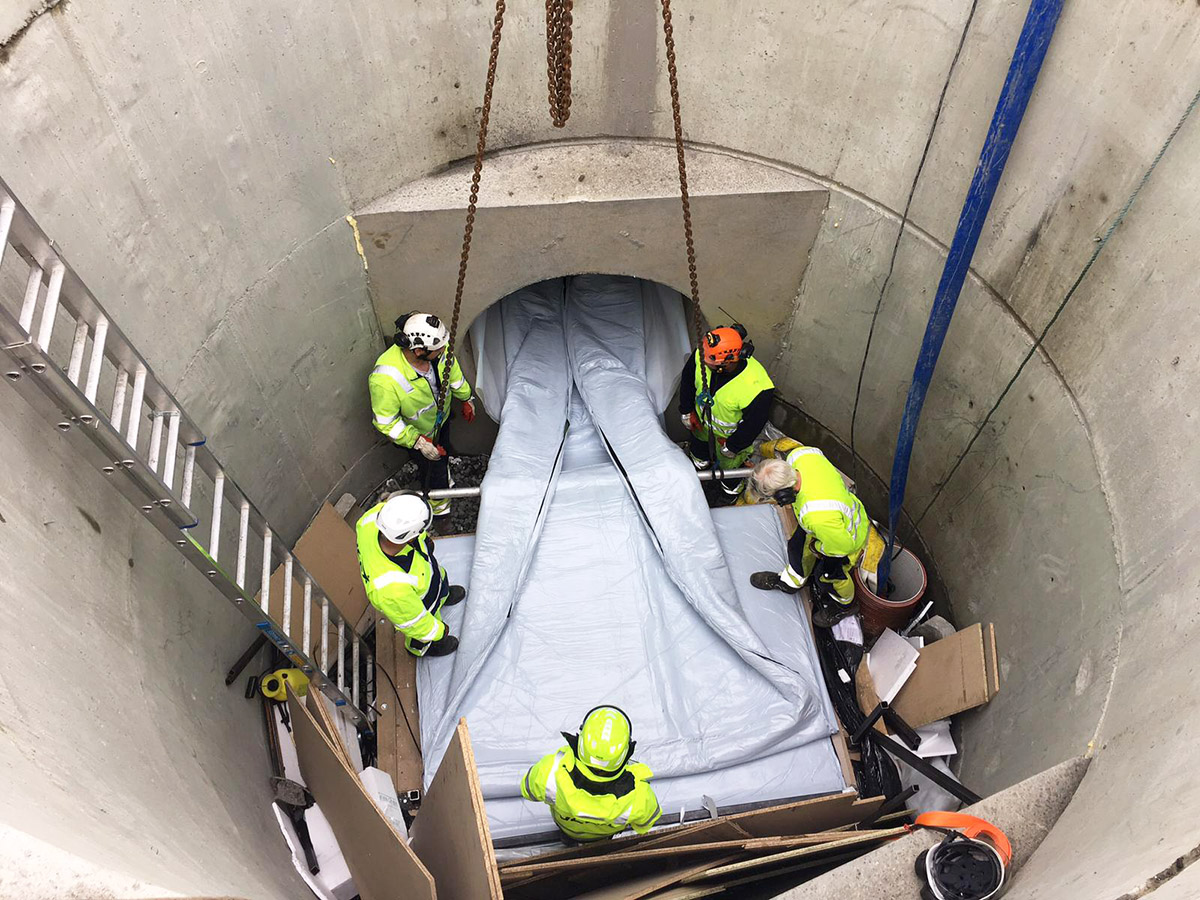
Berolina-Liner delivers maximum performance and efficiency for trenchless wastewater sewer rehabilitation. This factory resin-impregnated liner is pulled into the existing pipe, inflated with compressed air to conform tightly to the host pipe, and then cured using UV light. The result is a fully sealed pipe with restored structural integrity and long-term durability.
To meet a wide range of project requirements, the liner’s glass fiber layers are impregnated with premium unsaturated polyester or vinyl ester resins. These layers are strategically overlapped and staggered between two waterproof, polystyrene-tight film tubes for enhanced strength and reliability. The glass fiber orientation is specifically engineered to withstand installation pull-in forces.
Thanks to its advanced glass-fiber reinforcement, Berolina-Liner achieves exceptional structural strength with minimal wall thickness. This minimizes loss of pipe diameter while maximizing the load-bearing capacity of the rehabilitated system.
UV curing speeds vary based on the liner diameter and wall thickness, allowing the system to be optimized for each installation.

Highly Flexible and Adaptable
The Berolina-Liner is engineered for exceptional flexibility and adaptability in a wide range of rehabilitation applications. Its seamless, undersized design allows the liner to expand and conform tightly to existing pipes made from virtually any material. When properly designed and preassembled, the liner easily accommodates varying pipe profiles, including small diameter changes or transitions of up to 8% of the nominal pipe diameter.
The structural glass fibers are oriented circumferentially to optimize load distribution while maintaining the liner’s flexibility during installation. This unique design ensures both structural performance and ease of pull-in.
Every BKP Berolina liner is manufactured with a durable protective inner film that resists damage during installation and can be removed quickly and easily afterward. A UV-blocking outer film is also included as a standard feature.
For applications involving less deteriorated sewer systems, Berolina-Liners are available with an optional Integrated Enhanced Security (IES) layer, replacing the conventional smooth slip film for added installation security and performance. In addition, all Berolina-Liners include an internal abrasion-resistant layer to provide long-term protection against wear and flow-related damage.
The structure of the Berolina-Liner
Berolina-Liner unique

The Berolina-Liner can be manufactured in a length 3,281 ft (diameters of 8-12 in.)

Custom-made products for bridging larger profile and cross-section changes are also possible.

Nice, smooth and a lateral that can’t be missed. That’s the Berolina-Liner.

It is constructed seamlessly and undersized.
Berolina-Liner unique

12 steps to complete pipe rehabilitation

1. Secure the construction site

2. Thoroughly clean the pipe to be rehabilitated

3. CCTV pipe inspection beforehand
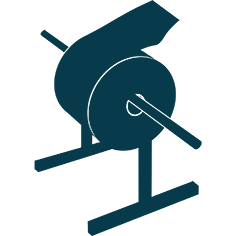
4. Pull in the smooth slip film (not necessary for liners with IES)

5. Pull in the liner by means of a winch

6. Close off the pipe ends with end-cans
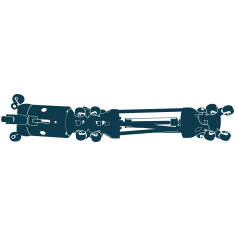
7. Pull in the UV light source

8. Inflate the liner against the pipe wall with compressed air

9. Cure the liner by means of a light source with a defined speed

10. Open the pipe ends (removal of the end-cans and flush cutting off)

11. Remove of the inner film

12. Cut open the easy to find inlets