




Other sizes on request.
Berolina-HF-Liner: Area of application
Gravity sewers
- Round profiles: ID 400 (16“) – ID 1,600 (63“)
- Ovoid cross-sections: 350/525 mm (14“/21“) – 1,200/1,800 mm (47“/71“)
Berolina-HF-Liner with IES: Area of application
Gravity sewers
- Circular profiles: DN 400 (6“) – DN 600 (24“)
Berolina-HF-Liner: Advantages
- Higher mechanical characteristics compared to the Berolina-Liner
- Reduction of the structurally required wall thickness compared to the Berolina-Liner
- Seamless design
- Particular extensibility
- Ready for installations up to 1,640 ft, with 8”-12” diameters available in lengths up to 3,281 ft
- Can be stored for 6 months (VE liners) or 12 months (UP liners)
- Fast curing (particularly compared to felt liners)
- Smooth surface
- Fast curing (particularly compared to felt liners)
- Abrasion protection layer
- Bridging small profile and cross-section changes
- Resin types depending on requirements (polyester, vinyl ester, polystyrene-free)
- Quality management in accordance with EN ISO 9001:2015
Berolina-HF-Liner with IES: Additional advantages
Integrated Enhanced Security (available up to DN 600)
- Can be a substitute for smooth slip film
- Reducing installation time
Structure of the Berolina-HF-Liner
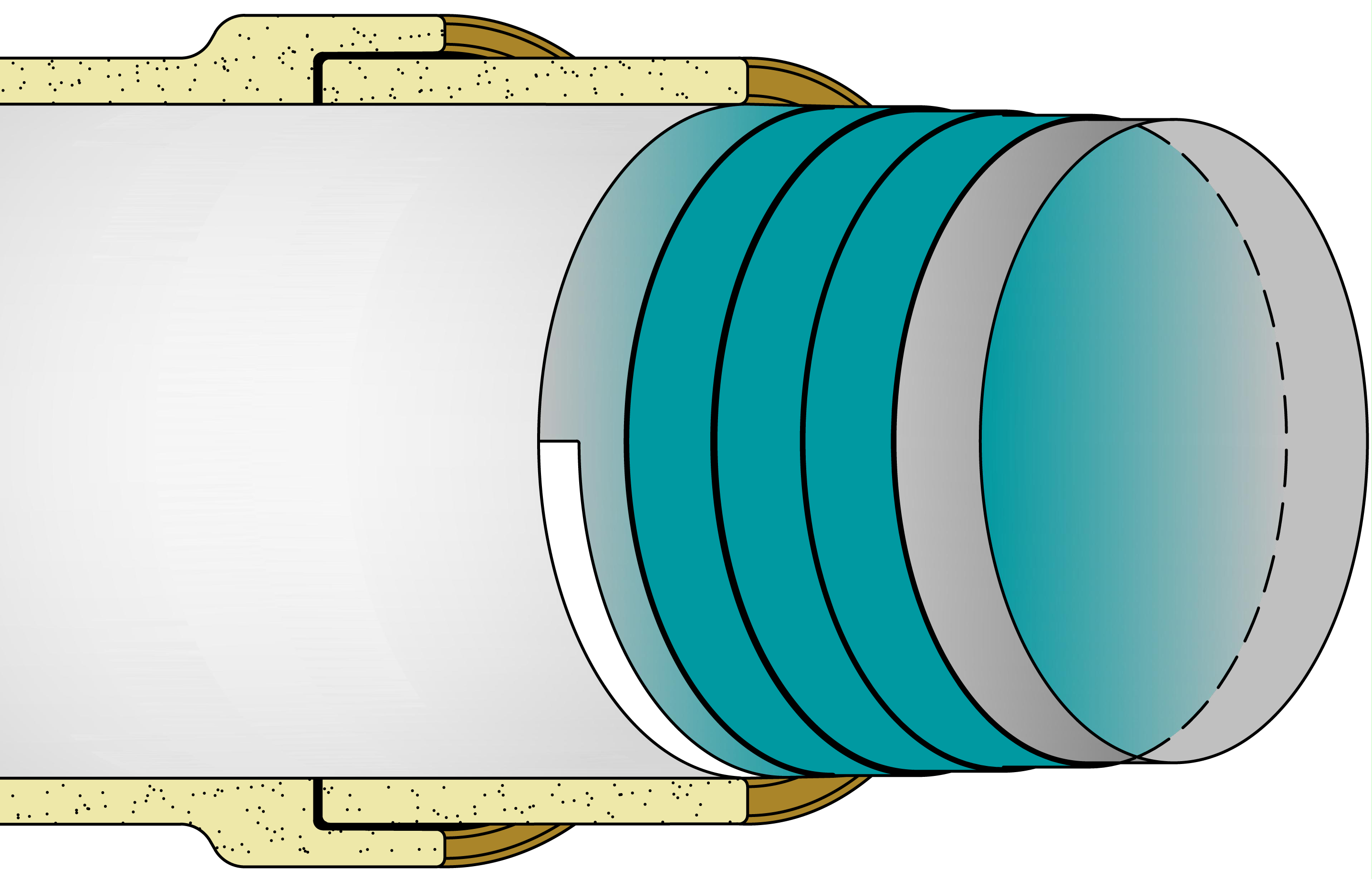






- Inner film
- Abrasion protection layer
- Different glass layers
- Outer film with UV protective film
- Optional: Integrated Enhanced Security (IES)
- Host pipe
Carrying material
Glass laying complex E-CR according to (ASTM D578)
Resins
Unsaturated polyester resins (UP resins)
- Type 1140 according to DIN 16946-2
- Group 3 according to DIN 18820-1
- Group 4 according to EN 13121-1
Vinyl ester resins (VE resins)
- Type 1310 according to DIN 16946-2
- Group 5 according to DIN 18820-1
- Group 7 B according to EN 13121-1
Styrene-free resin
Material properties
Density after curing (ASTM D1505): 99.3 lb/ft³ (±31.2 lb/ft³)
Glass fiber content (ASTM D2584): 53% (± 8%)
Glass surface weight: 26.5 oz/yd² (+4.4 / -2.9 oz/yd²
Short-term ring E-modulus (ASTM D2412): ≥ 2,465,000 psi
Short-term bending E-modulus (ASTM D790): ≥ 2,465,000 psi
Short-term bending stress (ASTM D790): ≥ 40,600 psi
Reduction factor for long-term values (ASTM D5365): A = 1.19
Long-term ring E-modulus (ASTM D2412): ≥ 2,060,000 psi
Long-term bending stress (ASTM D790): ≥ 34,100 psi
Laminate construction: Multi-layer, seemless and overlapping in longitudinal direction; overlaps are offset
Longitudinal expansion in calibration: ~ 0.0% (no change)
Permissible diameter tolerances of old pipes: DIA 32 in. ± 5% – DIA 32 in. ± 2%
* Load-bearing laminate thickness acc. DIN EN ISO 11296-4 (07/2011)

Phone: +49 (0)3304 / 20 88 124
Fax: +49 (0)3304 / 20 88 110
Cell: +49 (0)172 / 88 70 220

Phone: +49 (0)3304 / 20 88 100
Fax: +49 (0)3304 / 20 88 110
Cell: +49 (0)172 / 88 28 403
Phone: +49 (0)3304 / 20 88 100
Fax: +49 (0)3304 / 20 88 110
Cell: +49 (0)171 / 88 28 269

Phone: +49 (0)3304 / 20 88 100
Fax: +49 (0)3304 / 20 88 111
Cell: +49 (0)172 / 88 28 002
Video: Berolina-Liner System – Virtual construction site
-
- Area of application
-
Berolina-HF-Liner: Area of application
Gravity sewers
- Round profiles: ID 400 (16“) – ID 1,600 (63“)
- Ovoid cross-sections: 350/525 mm (14“/21“) – 1,200/1,800 mm (47“/71“)
Other sizes on request.
Berolina-HF-Liner with IES: Area of application
Gravity sewers
- Circular profiles: DN 400 (6“) – DN 600 (24“)
- Advantages
-
Berolina-HF-Liner: Advantages
- Higher mechanical characteristics compared to the Berolina-Liner
- Reduction of the structurally required wall thickness compared to the Berolina-Liner
- Seamless design
- Particular extensibility
- Ready for installations up to 1,640 ft, with 8”-12” diameters available in lengths up to 3,281 ft
- Can be stored for 6 months (VE liners) or 12 months (UP liners)
- Fast curing (particularly compared to felt liners)
- Smooth surface
- Fast curing (particularly compared to felt liners)
- Abrasion protection layer
- Bridging small profile and cross-section changes
- Resin types depending on requirements (polyester, vinyl ester, polystyrene-free)
- Quality management in accordance with EN ISO 9001:2015
Berolina-HF-Liner with IES: Additional advantages
Integrated Enhanced Security (available up to DN 600)
- Can be a substitute for smooth slip film
- Reducing installation time
- Structure
-
Structure of the Berolina-HF-Liner
- Inner film
- Abrasion protection layer
- Different glass layers
- Outer film with UV protective film
- Optional: Integrated Enhanced Security (IES)
- Host pipe
- Technical data
-
Carrying material
Glass laying complex E-CR according to (ASTM D578)
Resins
Unsaturated polyester resins (UP resins)
- Type 1140 according to DIN 16946-2
- Group 3 according to DIN 18820-1
- Group 4 according to EN 13121-1
Vinyl ester resins (VE resins)
- Type 1310 according to DIN 16946-2
- Group 5 according to DIN 18820-1
- Group 7 B according to EN 13121-1
Styrene-free resin
Material properties
Density after curing (ASTM D1505): 99.3 lb/ft³ (±31.2 lb/ft³)
Glass fiber content (ASTM D2584): 53% (± 8%)
Glass surface weight: 26.5 oz/yd² (+4.4 / -2.9 oz/yd²Short-term ring E-modulus (ASTM D2412): ≥ 2,465,000 psi
Short-term bending E-modulus (ASTM D790): ≥ 2,465,000 psi
Short-term bending stress (ASTM D790): ≥ 40,600 psiReduction factor for long-term values (ASTM D5365): A = 1.19
Long-term ring E-modulus (ASTM D2412): ≥ 2,060,000 psi
Long-term bending stress (ASTM D790): ≥ 34,100 psiLaminate construction: Multi-layer, seemless and overlapping in longitudinal direction; overlaps are offset
Longitudinal expansion in calibration: ~ 0.0% (no change)
Permissible diameter tolerances of old pipes: DIA 32 in. ± 5% – DIA 32 in. ± 2%* Load-bearing laminate thickness acc. DIN EN ISO 11296-4 (07/2011)
- Contact
-

Phone: +49 (0)3304 / 20 88 124
Fax: +49 (0)3304 / 20 88 110
Cell: +49 (0)172 / 88 70 220
Phone: +49 (0)3304 / 20 88 100
Fax: +49 (0)3304 / 20 88 110
Cell: +49 (0)172 / 88 28 403Phone: +49 (0)3304 / 20 88 100
Fax: +49 (0)3304 / 20 88 110
Cell: +49 (0)171 / 88 28 269Phone: +49 (0)3304 / 20 88 100
Fax: +49 (0)3304 / 20 88 111
Cell: +49 (0)172 / 88 28 002 - Downloads
- Virtual construction site
-
Video: Berolina-Liner System – Virtual construction site
Area of application
Berolina-HF-Liner: Area of application
Gravity sewers
- Round profiles: ID 400 (16“) – ID 1,600 (63“)
- Ovoid cross-sections: 350/525 mm (14“/21“) – 1,200/1,800 mm (47“/71“)
Other sizes on request.
Berolina-HF-Liner with IES: Area of application
Gravity sewers
- Circular profiles: DN 400 (6“) – DN 600 (24“)
Advantages
Berolina-HF-Liner: Advantages
- Higher mechanical characteristics compared to the Berolina-Liner
- Reduction of the structurally required wall thickness compared to the Berolina-Liner
- Seamless design
- Particular extensibility
- Ready for installations up to 1,640 ft, with 8”-12” diameters available in lengths up to 3,281 ft
- Can be stored for 6 months (VE liners) or 12 months (UP liners)
- Fast curing (particularly compared to felt liners)
- Smooth surface
- Fast curing (particularly compared to felt liners)
- Abrasion protection layer
- Bridging small profile and cross-section changes
- Resin types depending on requirements (polyester, vinyl ester, polystyrene-free)
- Quality management in accordance with EN ISO 9001:2015
Berolina-HF-Liner with IES: Additional advantages
Integrated Enhanced Security (available up to DN 600)
- Can be a substitute for smooth slip film
- Reducing installation time
Structure
Structure of the Berolina-HF-Liner
- Inner film
- Abrasion protection layer
- Different glass layers
- Outer film with UV protective film
- Optional: Integrated Enhanced Security (IES)
- Host pipe
Contact
Phone: +49 (0)3304 / 20 88 100
Fax: +49 (0)3304 / 20 88 111
Cell: +49 (0)172 / 88 28 002
Phone: +49 (0)3304 / 20 88 100
Fax: +49 (0)3304 / 20 88 110
Cell: +49 (0)171 / 88 28 269
Phone: +49 (0)3304 / 20 88 100
Fax: +49 (0)3304 / 20 88 110
Cell: +49 (0)172 / 88 28 403
Phone: +49 (0)3304 / 20 88 124
Fax: +49 (0)3304 / 20 88 110
Cell: +49 (0)172 / 88 70 220
Technical data
Carrying material
Glass laying complex E-CR according to (ASTM D578)
Resins
Unsaturated polyester resins (UP resins)
- Type 1140 according to DIN 16946-2
- Group 3 according to DIN 18820-1
- Group 4 according to EN 13121-1
Vinyl ester resins (VE resins)
- Type 1310 according to DIN 16946-2
- Group 5 according to DIN 18820-1
- Group 7 B according to EN 13121-1
Styrene-free resin
Material properties
Density after curing (ASTM D1505): 99.3 lb/ft³ (±31.2 lb/ft³)
Glass fiber content (ASTM D2584): 53% (± 8%)
Glass surface weight: 26.5 oz/yd² (+4.4 / -2.9 oz/yd²
Short-term ring E-modulus (ASTM D2412): ≥ 2,465,000 psi
Short-term bending E-modulus (ASTM D790): ≥ 2,465,000 psi
Short-term bending stress (ASTM D790): ≥ 40,600 psi
Reduction factor for long-term values (ASTM D5365): A = 1.19
Long-term ring E-modulus (ASTM D2412): ≥ 2,060,000 psi
Long-term bending stress (ASTM D790): ≥ 34,100 psi
Laminate construction: Multi-layer, seemless and overlapping in longitudinal direction; overlaps are offset
Longitudinal expansion in calibration: ~ 0.0% (no change)
Permissible diameter tolerances of old pipes: DIA 32 in. ± 5% – DIA 32 in. ± 2%
* Load-bearing laminate thickness acc. DIN EN ISO 11296-4 (07/2011)
Faster curing and easier handling
Due to the special construction of the glass sheets and higher glass content, the Berolina-HF-Liner achieves higher mechanical characteristics resulting in a reduction of the structurally required wall thickness compared to the normal Berolina-Liner. The resulting lower weight allows easier handling.
The Berolina-HF-Liner is also available with Integrated Enhanced Security (IES) – a smooth slip film is no longer necessary for the pulling in with the result that installation time can be reduced by up to 60 minutes.
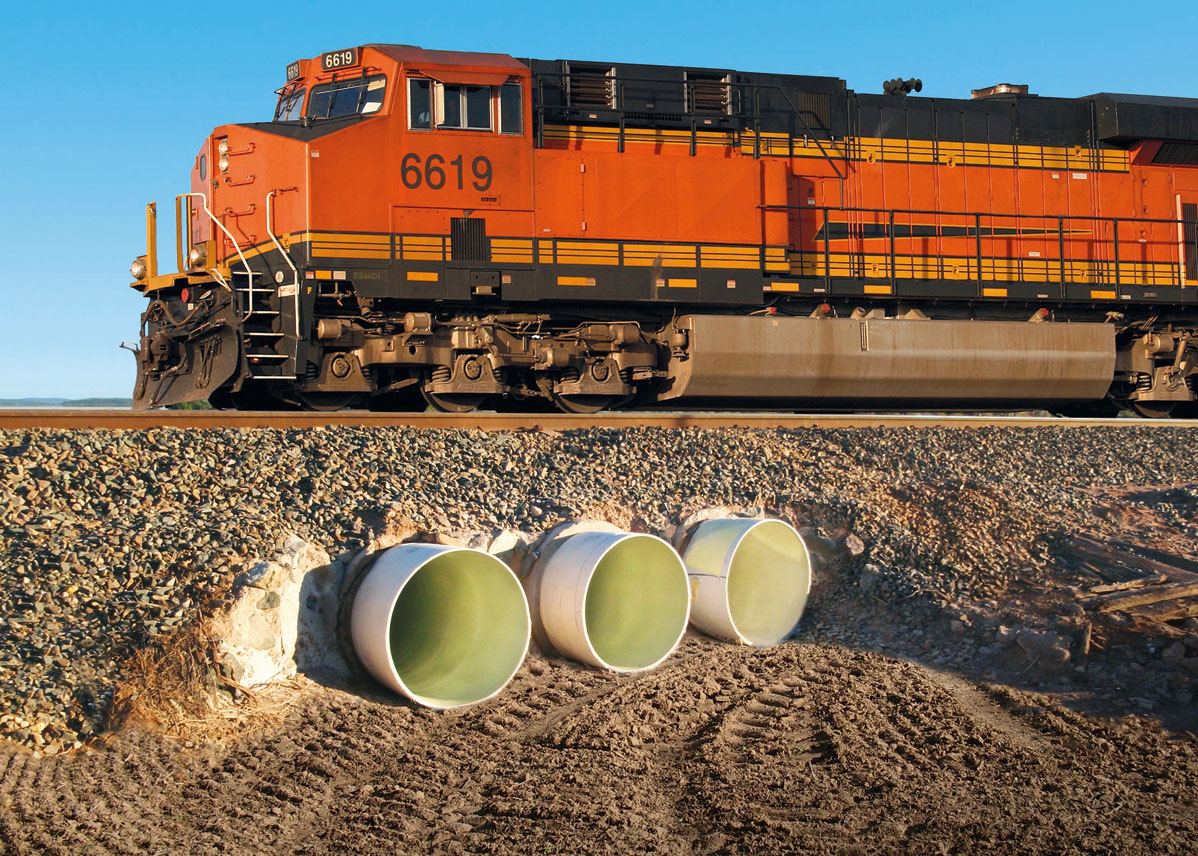
Der Aufbau des Berolina-HF-Liners
12 steps to complete pipe rehabilitation

1. Secure the construction site

2. Thoroughly clean the pipe to be rehabilitated

3. CCTV pipe inspection beforehand
4. Pull in the smooth slip film (not necessary for liners with IES)

5. Pull in the liner by means of a winch

6. Close off the pipe ends with end-cans
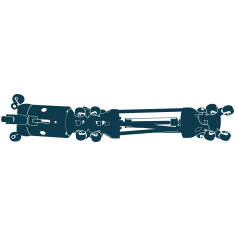
7. Pull in the UV light source

8. Inflate the liner against the pipe wall with compressed air

9. Cure the liner by means of a light source with a defined speed

10. Open the pipe ends (removal of the end-cans and flush cutting off)

11. Remove of the inner film

12. Cut open the easy to find inlets